 01crew
Market advice
Bay Spotter
Before your action, inspect the top draw card. Keep it on top or put it at the bottom, then discard this optional spotter card.
A bright fishing card table built for trades, happy surprises and the satisfaction of completing a set. Pick a bay, build your hand and hang your third badge before the picnic is over.
A LITTLE STRATEGY.
A LOT TO TALK ABOUT.

 GOOD
GOODThe club portraits give the table its personality. They do not assign different powers, so choose your favourite and learn the same simple turn together.
01crewBefore your action, inspect the top draw card. Keep it on top or put it at the bottom, then discard this optional spotter card.
 02tackle
This is a support card carrying a feather mark. Collect shell and wave marks with it to make a wild; it is not a fish for a colour set.
 03catch
Count this card as one blue fish. Three blue fish, or two blue fish and one wild, can be showcased for one badge.
Deal a fresh five-card practice hand. Matching habitat colours are highlighted and the guide tells you whether a trio is ready. This teaching sample uses fish cards only, with no trading or scoring saved.
Deal a hand to see which habitat colours belong together.
During your own turn, exchange one support card of each scatter mark for a wild card. This exchange is free, but the wild counts toward the seven-card hand limit. A showcased set may include only one wild, and an unused wild has no score.
See it in the rulesA turn is one clear decision: draw, trade or show a set. The open market makes it easy for everyone to follow the table, even while they are still learning.
Cast to draw two cards, trade one card from your hand for one face-up market card, or showcase a matching trio. Only one of these actions is taken on a turn.
Three fish cards of the same habitat earn one badge when showcased. Discard the trio and keep the badge in front of you. A wild card may replace one fish.
At the end of your turn, keep no more than seven cards. Put extra cards into the discard pile; market cards stay where they are until a trade changes them.
When someone earns a third badge, each other member gets one final turn. Compare badge totals after that last circuit of the table.
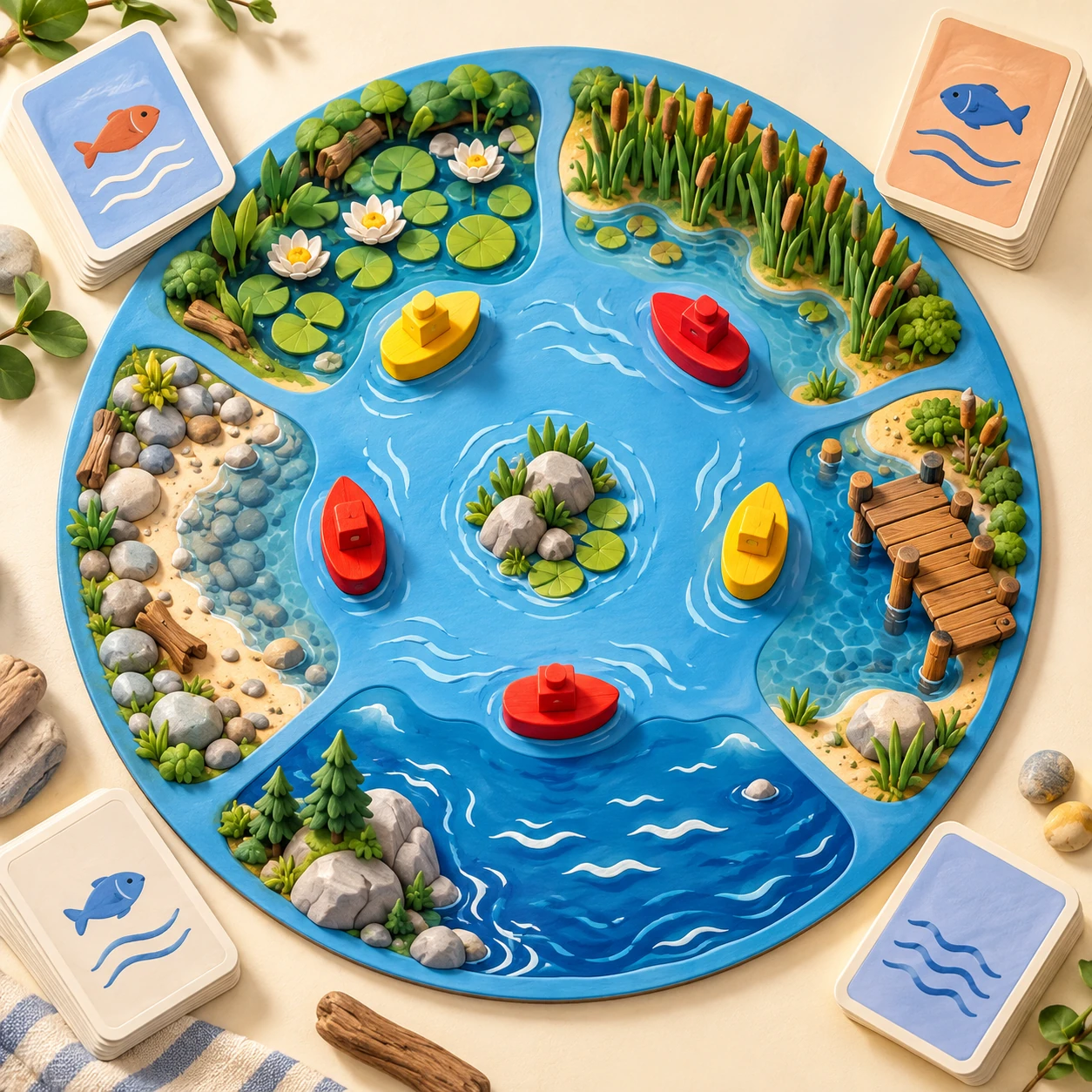 THE WORLD ON YOUR TABLE
The circular mat organises five habitat colours: lily, cove, stream, reef and deep water. It is a place to arrange the open market, not a movement track. Your growing hand does the travelling.
Two friendly colours to spot first. Every habitat follows the same set-building rules.
Watch the shared market: a card somebody else puts down may finish your next trio.
Blue fish are no rarer or stronger than the others. A complete colour set is what earns the badge.
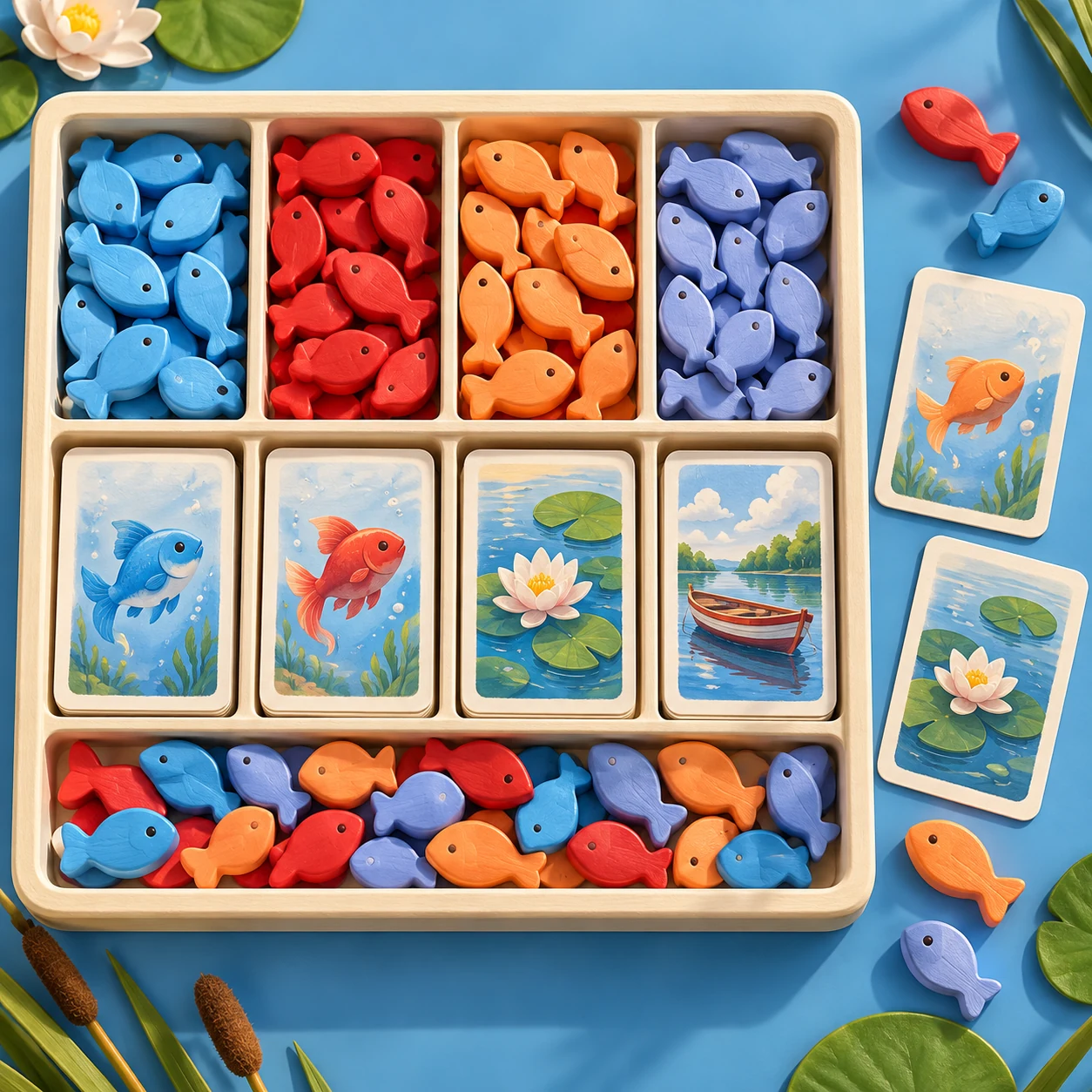
The proposed club box contains 60 main-deck cards, wild cards, badge counters and a five-bay market mat. Portrait and weather cards are optional additions; leave them out while learning the basic draw–trade–showcase rhythm.
 Picnic Shower
In the optional event variant, replace the five market cards from the draw pile. Discard the old market together and resume the usual turn order.

A useful card never stays lonely for long.
The basic game uses the shared market only. That keeps trades clear and gives every member the same opportunity to inspect the available cards.
No. One shell, one feather and one wave make a wild card. You still need two fish of one habitat to showcase a set with that wild.
Shuffle the discard pile into a new draw pile. Keep hands, the open market and badges in place; the game’s ending condition does not change.
Neither is required to read this site. Cloudfin Club is a tabletop design concept rather than a paid club, official game service or shop.
Find your colours, make a useful exchange and leave enough room at the table for the next good idea.
Bring the rules to the table